
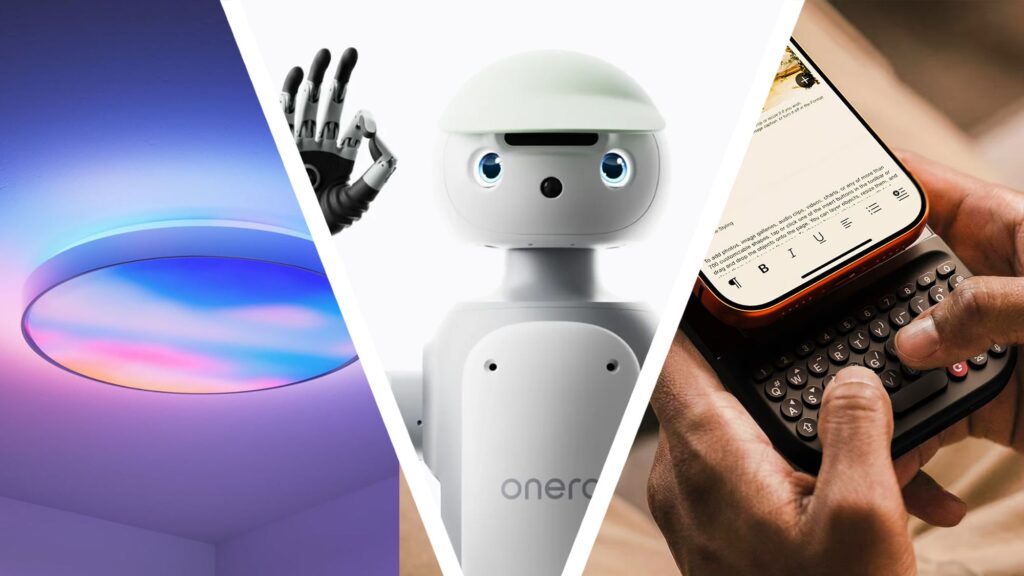
CES 2026 delivered a whirlwind of breakthroughs, from groundbreaking AI-assisted hardware to next-generation display tech and eco-conscious gadgets built for everyday life. As always, the show was a melting pot of big-brand unveilings, clever startups, and unexpected innovations that push the boundaries of what our devices can do. Below is a curated, thoughtful pass through the ten most compelling products and trends that stood out at the expo, with practical insights on what they mean for consumers, prosumers, and developers alike. Whether you’re shopping for a smarter home, chasing photo and video perfection, or scouting the future of portable computing, these picks capture the pulse of CES 2026.
- Ultra-Efficient AI-Powered Laptops: The Quiet Revolution in Portability
What stands out: A wave of laptops that pair advanced, energy-efficient CPUs with AI accelerators designed to optimize performance in real-world tasks while sipping battery life. These machines aren’t just faster—they manage thermals and power draw so aggressively that fan noise becomes a non-factor in most scenarios.
Why it matters: For professionals who travel or work remotely, the combination of sustained performance, long battery life, and silent operation translates to real-world productivity gains. The AI layers handle tasks like smart photo/video editing, on-device transcription, and real-time language translation without forcing a cliff-edge between battery life and power.
What to watch: Thermal throttling remains a tricky challenge for ultra-thin devices under sustained workloads. Look for demonstrations of long workloads, such as 4K video editing or machine learning inference on-device, to gauge real-world endurance. - Quantum-Enhanced Displays: Color, Brightness, and Energy Harmony
What stands out: Several brands teased displays with quantum-dot or quantum-inspired backlights combined with high-dynamic-range processing and ambient light adaptation. The result: richer color volumes, improved HDR performance, and perceptible gains in brightness without huge power costs.
Why it matters: Content creators and enthusiasts who demand accurate color representation will benefit from more consistent panel performance across lighting conditions. For gaming and multimedia enthusiasts, the higher brightness with better efficiency translates into more immersive experiences with less eye fatigue.
What to watch: Look for real-world test data on color gamut coverage, peak brightness in HDR modes, and uniformity across the panel, as well as eye comfort features that mitigate blue-light exposure without sacrificing color accuracy. - Real-Time Collaboration Displays: The New Office Is a Shared Canvas
What stands out: A new generation of large-format displays designed for hybrid teams, supporting ultra-low latency touch input, integrated AI-driven meeting assistants, and seamless wireless collaboration. Some models automate white-boarding, capture meeting notes, and summarize decisions in real time.
Why it matters: The modern workplace is distributed, and these tools reduce friction in group sessions, whether brainstorming, design reviews, or cross-location project handoffs. A shared canvas with smart indexing and search helps teams stay aligned and reduce post-meeting fallout.
What to watch: Evaluate the latency numbers, handwriting fidelity, and how robust the AI meeting assistant is at extracting action items and decisions from conversations that include multiple speakers. - AI-Driven Health Monitors: Continuous Insight, Worry-Free Wearables
What stands out: Wearables that go beyond steps and heart rate to monitor glucose trends, hydration, sleep architecture, and stress signals with on-device analytics and optional cloud privacy modes. Some devices paired with smart fabrics or patch sensors for more granular data.
Why it matters: Health-tracking tech is moving toward continuous, contextual insight that can influence daily decisions. For users with chronic conditions or athletes optimizing performance, on-device inference reduces data leakage risk and can offer more timely prompts.
What to watch: Pay attention to how often the algorithms can detect anomalies, how transparent the data interpretation is, and the steps the vendor takes to protect sensitive health data. - next-Gen E-Ink and Biometric Security: Readability Meets Fortified Privacy
What stands out: E-Ink displays that now support full-color content with improved refresh rates, paired with biometric authentication solutions for devices and wearables. The combination promises longer battery life and more secure, easily readable information in bright environments.
Why it matters: For readers, researchers, and field workers who need durable, low-power screens, these advances offer legibility and security without sacrificing convenience. For devices like e-notebooks or secure portable tools, it’s a compelling mix of comfort and protection.
What to watch: Assess the durability of fast color e-ink with real-world refresh performance, as well as the ease of use and reliability of biometric sensors in diverse lighting and temperature conditions. - Sustainable Tech: Circular Design and Refurbishability Come of Age
What stands out: A prominent emphasis on modular hardware, repairability, and recyclable materials, with several brands outlining end-to-end take-back schemes and upcycling programs. Energy efficiency labels and lifecycle analyses were more visible than ever.
Why it matters: The tech industry’s environmental footprint is increasingly scrutinized by consumers and regulators. Products designed for easier repair and longer lifespans reduce waste and extend the value of devices. This trend also fosters healthier ecosystems for third-party accessories and components.
What to watch: Look for clearly disclosed repairability scores, standardization of modular interfaces, and the availability of official repair guides and parts to ensure promises translate into real-world practice. - Autonomous Micro-Delivery Rovers: The Neighborhood Edge of Autonomy
What stands out: A handful of companies showcased compact autonomous rovers designed for last-mile delivery or courier tasks, optimized for city sidewalks and campuses. The tech blends lightweight perception systems, edge AI, and energy-efficient propulsion.
Why it matters: While not consumer devices per se, these rovers point toward a future where routine errands and parcel delivery could leverage autonomous on-site bots, reducing human workload and traffic congestion. They’re also useful in large facilities, hospitals, and universities for rapid internal logistics.
What to watch: Regulatory environments, safety features, battery life in urban environments, and how these systems handle people, pets, and unexpected obstacles. Learn More… - Next-Gen Cameras and Computational Photography: The Smartphone Photographer’s Toolkit Expands
What stands out: Advanced computational photography packages that combine multi-shot depth sensing, AI-assisted scene understanding, and low-light enhancements with hardware improvements in sensor stacks and lens systems. Some brands revealed partnerships with cloud providers to offload heavy processing when on-device compute is limited.
Why it matters: For creators, these tools push the boundaries of what handheld devices can capture in challenging lighting or dynamic scenes. The synergy of hardware improvements and software maturity expands the use cases for mobile photography, videography, and creative videography on the go.
What to watch: Battery impact during heavy processing, the speed of raw-to-finished-workflow, and how well the computational tools translate to real-world results across genres like portraits, landscapes, and action. - Open-Standard Connectivity and Wireless Power: Freedom Without Constraint
What stands out: Several demonstrations of cross-brand interoperability for charging, data transfer, and accessories, driven by open standards. Wireless power transfer with longer range, safer alignment, and higher efficiency was a focal point in many booths.
Why it matters: Ecosystem compatibility reduces friction for consumers who mix and match devices from different brands. Open standards empower developers to build universal accessories, while advances in wireless charging can simplify desk setups and travel gear.
What to watch: The maturity of the standards, real-world charge times, safety features, and the extent to which existing devices can adopt these standards through firmware updates or modular hardware changes. - Personal Cloud and Edge AI: Privacy-First Data Management
What stands out: A wave of devices and services aimed at giving users control over their data with on-device AI processing, private-by-design cloud architectures, and transparent data governance controls. The emphasis was on keeping sensitive information on-device whenever possible, with optional opt-in cloud offloads.
Why it matters: In an era where data privacy is a hot topic, these offerings provide practical pathways to retain value from AI capabilities without surrendering personal data to centralized services. They also promise faster performance by reducing round-trips to the cloud for common tasks.
What to watch: The balance between on-device processing and optional cloud features, the ease of use of privacy controls, and the reliability of offline operation for critical tasks when connectivity is poor.
How to evaluate CES 2026 picks for your needs
- Define your priorities: Are you chasing professional-grade performance, sustainability, or consumer convenience? CES showcases a broad spectrum, but your home or workflow will reveal which innovations truly deliver value.
- Test in real-world contexts: Join hands-on demos and pay attention to how a device handles long sessions, varying lighting, different network conditions, and real-world workloads. Benchmarks matter, but consistency and reliability win in daily use.
- Consider ecosystem and interoperability: If you’re invested in particular brands or platforms, prioritize devices and services with strong open standards and cross-brand compatibility. This minimizes friction and future-proofing concerns.
- Assess privacy and data governance: For devices that handle sensitive information or health data, scrutinize how data is stored, processed, and transmitted. Prefer devices with clear privacy policies, on-device analytics, and transparent user controls.
What these CES 2026 picks tell us about the near future
CES 2026 underscored a few enduring themes. First, AI continues to recenter itself at the hardware level, with on-device intelligence becoming a critical differentiator for performance, privacy, and energy efficiency. Second, sustainability is not an afterthought but a core design criterion, influencing materials, repairability, and lifecycle thinking. Third, the lines between consumer devices and professional-grade tools are blurring as cameras, laptops, and collaborative displays incorporate more robust AI features to boost productivity and creativity. Finally, interoperability and standardization are gaining traction, promising a more cohesive tech landscape where devices from different brands can work seamlessly together.
If you’d like, I can tailor a version of this article for a specific audience—such as developers, photographers, gamers, or fitness enthusiasts—or expand on any of the ten picks with technical specs, price ranges, or comparisons to previous CES iterations. Feel free to tell me your focus, and I’ll customize the content accordingly.